Starship: The Journey to Mars and Beyond
SpaceX's groundbreaking Starship program recently achieved orbital flight, successfully deploying satellites for the company's Starlink constellation. This critical development sparks debate among experts regarding whether this represents a change in direction or a necessary step towards its long-term aspiration of human exploration and colonization of Mars.

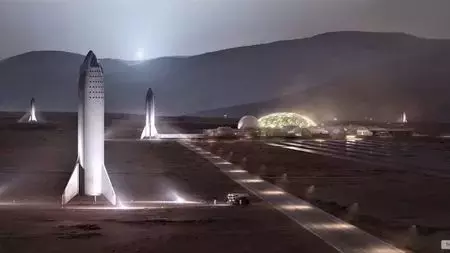
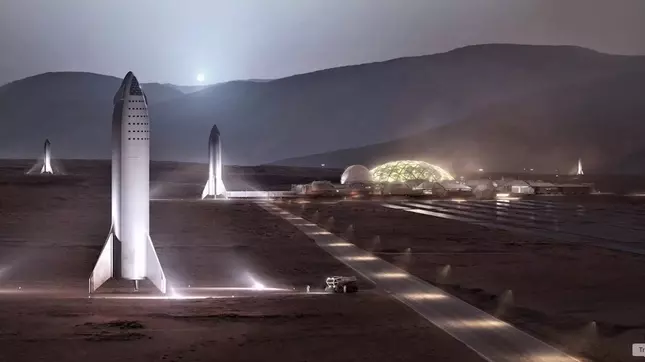
The vision for a colossal spacecraft capable of interplanetary travel was initially unveiled a decade ago by Elon Musk. Over the years, the design and technology have undergone substantial transformations, evolving from the carbon-fiber Interplanetary Transport System (ITS) to the current stainless-steel Starship. The development journey has been marked by numerous test flights, including high-altitude hops, landings, and occasional setbacks such as explosions, all contributing to a rapid learning curve. A significant milestone was achieved when NASA selected Starship as the lunar lander for its Artemis missions, underscoring its potential beyond Mars. Subsequent full stack flights, while not without their challenges, have consistently progressed, demonstrating increasing capabilities, including controlled splashdowns and the successful catching of a Super Heavy booster.
Despite these successes, substantial hurdles remain, particularly concerning large-scale cryogenic propellant transfer in orbit, a critical technology for missions to the Moon or Mars. This process, likened to an in-space gas station, presents unique engineering challenges due to extreme temperatures and microgravity. The timeline for demonstrating this capability is still uncertain, impacting the feasibility of near-term Mars missions. While earlier predictions by Musk suggested a 2026 Mars attempt, the lack of propellant transfer demonstrations and the limited launch windows have pushed this opportunity to late 2028 or early 2029. In the interim, Starship's immediate priority lies in deploying Starlink satellites, a role deemed essential for both business objectives and accumulating invaluable flight experience. However, its long-term ambition of making humanity multiplanetary and establishing a self-sufficient city on Mars remains the driving force behind its continued development, with the Moon serving as a vital stepping stone for testing and refinement before venturing further into the solar system.
The journey of Starship represents an ambitious endeavor to push the boundaries of human space exploration. The iterative development process, characterized by continuous learning from both successes and failures, is a testament to the innovative spirit driving humanity's quest to become a multiplanetary species. While challenges persist, the unwavering commitment to this grand vision holds the promise of a future where humanity's presence extends beyond Earth, fostering a sense of shared purpose and inspiring generations to come.