Acclaimed Director David Fincher Reflects on Potential Career Conclusion with Latest Film
Fincher's Farewell? A Master Contemplates His Last Cinematic Act
A Veteran Filmmaker's Contemplation of Retirement
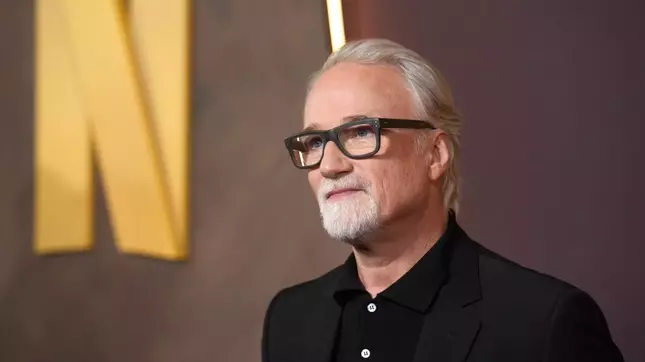
Celebrated director David Fincher has suggested that his newest creation, 'The Further Mis-Adventures of Cliff Booth,' could potentially represent his concluding work in cinema. This sentiment emerged during a recent podcast discussion, where the Oscar-nominated artist conveyed a noticeable shift in his life's focal points. At 64, and having been behind the camera since his early twenties, Fincher acknowledges a significant change from his younger days when his technical mastery offered him a unique authority over his production teams.
Evolving Patience and Priorities in Modern Cinema
Fincher elaborated on how his capacity for patience has diminished over time, with his personal priorities broadening beyond the singular pursuit of filmmaking. He voiced a strong critique of the film industry's move towards an industrialized model, asserting that such an approach fundamentally undermines the inherently intimate nature of narrative creation. For Fincher, the essence of storytelling demands a personal touch, which he feels is often lost in the large-scale, factory-like production environments of today.
The Quest for Efficiency and Work-Life Balance
The director expressed a desire for more efficient production schedules, stating that any activity not directly involving the actors on set feels like misspent time. He advocated for more reasonable working hours, preferring a ten-hour workday over the customary twelve-hour shoots, highlighting the personal toll such demanding schedules take. This reflection underscores a yearning for a more balanced lifestyle, where professional commitment doesn't completely overshadow personal well-being.
Innovation Through AI: Streamlining the Creative Process
Fincher also touched upon the integration of artificial intelligence in the making of 'Cliff Booth,' emphasizing his belief that filmmaking is often unnecessarily extravagant. He views AI as a tool to mitigate this inherent wastefulness, seeking smarter, more streamlined solutions to production challenges. This perspective indicates a move away from simply adding more human resources to solve problems, advocating instead for technological innovation to enhance efficiency.
Challenging Traditional Production Paradigms
The acclaimed director clarified that his embrace of AI is not an act against human contribution or fair compensation. Instead, he challenges the century-old reflex of combating production difficulties by merely increasing manpower. For Fincher, the 21st century demands a more refined and focused approach to problem-solving, where intelligent design and technological assistance lead to greater efficiency, rather than just brute force labor.
Critical Reception: A Follow-Up to a Tarantino Classic
In a review by a leading film critic for a prominent industry publication, 'The Further Mis-Adventures of Cliff Booth' was assessed as a continuation of Quentin Tarantino's 'Once Upon a Time in Hollywood.' The critic noted that while Brad Pitt's captivating screen presence and Fincher's precise direction were evident, the blend with Tarantino's narrative style wasn't always seamless. The unique creative energies of the trio, however, fostered an infectious sense of camaraderie that permeated the film.
A Charismatic Yet Less Substantial Narrative
The review further observed that despite the undeniable charm and enjoyable atmosphere of the movie, it felt somewhat extended and less profound compared to its 2019 predecessor. While the film maintained a compelling allure, its narrative depth and impact were perceived as slightly diminished, suggesting a work that, while entertaining, might not carry the same weight as its original inspiratio