Addressing Food Insecurity: Community Efforts Amidst Policy Shifts
The landscape of food assistance in the United States is currently facing significant challenges, with millions of lower-income households experiencing heightened food insecurity. A recent government shutdown led to an unprecedented 43-day suspension of the Supplemental Nutrition Assistance Program (SNAP), leaving 42 million families, including vulnerable children and seniors, in distress over their next meal. Compounding this, new SNAP regulations have expanded work requirements for eligibility, now encompassing veterans, the homeless, and adults aged 54 to 65, who were previously exempt. These stricter rules, requiring 20 hours of weekly work, are expected to disproportionately affect those in economically depressed sectors, caregivers, and individuals with disabilities. Experts in food security warn that these policy changes will inevitably lead to increased hunger, drain local economies, and burden state governments with additional costs as they struggle to manage budgets while addressing rising need.
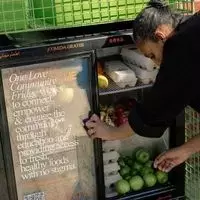
Amidst these policy shifts, the importance of community-led initiatives and mutual aid efforts has come to the forefront. Organizations like Food Not Bombs, a global volunteer network co-founded by Keith McHenry in 1980, continue to provide free food to communities without preconditions, partnering with local food banks, farms, and grocers. McHenry stresses that food insecurity has reached a critical point where it affects nearly everyone, compelling more people to acknowledge and address the systemic issues. Despite the nation's vast food resources, including 45,575 supermarkets and a thriving restaurant industry, access to food has become increasingly difficult for many. The article points out the alarming statistic that even employees of major grocery retailers like Walmart, which garners billions in revenue, may themselves be SNAP and Medicaid beneficiaries. Data from 2023 indicates that 18 million U.S. households faced food insecurity, a rise from the previous year, highlighting a profound disconnect between food availability and accessibility.
In response, charities and community pantries, such as the South Philadelphia Community Fridge (SPCF) and Connected Chef in New York City, are diligently working to bridge these gaps. SPCF, led by Kathryn Nolan, operates on the principle that food is a fundamental human right, not a privilege that must be earned. They ensure community fridges and pantries are stocked for anyone in need, teaching volunteers to gather surplus food and emphasizing that these are shared resources, not charity. Connected Chef, under the direction of Karina Vasquez Greenberg, offers fresh produce on a sliding payment scale and developed a 'solidarity box' program, delivering fresh produce to families during the pandemic. These organizations prioritize community dialogue and adaptability, continually evolving their services based on direct feedback from residents. They underscore that while policy changes can exacerbate food insecurity, a robust community safety net built on mutual aid, empathy, and collective action is essential. Individuals can support these efforts by donating time, funds, or goods, understanding local pantry needs, or simply buying an extra item at the grocery store to share, fostering stronger community bonds and ensuring that everyone has access to nourishing food.
Food is a fundamental right, not a luxury. In a society of abundance, no one should ever have to question where their next meal will come from. By strengthening community ties and supporting local initiatives, we can collectively build a more resilient and equitable food system, ensuring dignity and sustenance for all.