Financial Innovations for Indonesian Film Professionals: Amar Bank's Role at JAFF Market
Empowering Indonesian Cinema: Bridging Financial Gaps for Creative Excellence
A Collaborative Effort to Strengthen Film Industry Finances at JAFF Market
At the recent Jogja-Netpac Asian Film Festival (JAFF) Market, a significant panel discussion brought together three prominent Indonesian film guilds—representing editors, cinematographers, and casting directors—with Amar Bank, a key sponsor. The central theme of this gathering was to explore how Amar Bank Bisnis, the bank's advanced digital accounting solution, could revolutionize the transparency and management of installment payments for the nation's independent film workers and production enterprises.
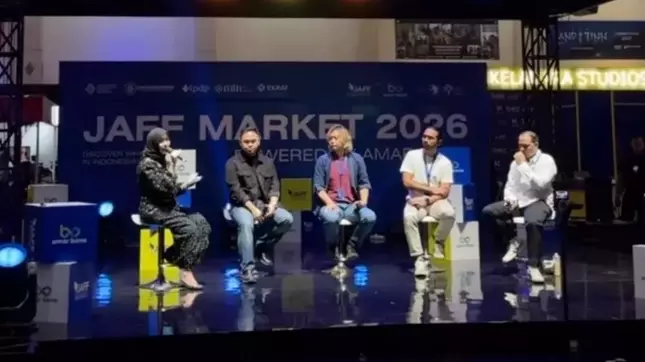
Addressing the Diverse Financial Landscape of Film Professionals
Joshua Paul, the Senior Vice President of Micro, Small, and Medium Enterprises (MSMEs) at Amar Bank, articulated the bank's perspective during the session. He highlighted that despite the unique operational and payment structures inherent to each film discipline, a universal challenge faced by all was the presence of significant accounting gaps. These inconsistencies, Paul noted, frequently impede the bank's ability to conduct thorough risk assessments, underscoring a shared bottleneck across the industry.
Initiatives by Indonesian Film Guilds to Nurture Talent and Ethics
Representatives from the film guilds detailed their individual contributions to industry development. Wawan I. Wibowo of the Indonesian Film Editors (INAFED) outlined internal programs focused on mindset development and external workshops for students and the public. Bayu Prihantoro of the Indonesian Cinematographers Society (ICS) emphasized creating a structured pathway for new talent. Sanca Khatulistiwa of the Indonesian Casting Association (ACI) expressed intentions to launch an ethical and free casting process road tour, promoting trust and safety.
Amar Bank's Digital Solutions for Enhanced Financial Management
In response to the identified financial shortcomings, Amar Bank has implemented robust systems designed to streamline financial governance. Paul explained that the bank offers project-specific accounting capabilities, enabling meticulous tracking of funds dedicated to individual productions. This approach promises to enhance financial clarity and accountability, empowering both freelancers and production companies to better manage their monetary flows.
Tackling the Precarious Nature of Freelance Film Income
The discussion delved into the specific financial vulnerabilities of freelance film professionals. Wibowo from INAFED illustrated the challenge of installment-based payments, particularly how final disbursements often depend on subjective milestones like 'picture lock,' which can lead to prolonged delays. He also shared that Amar Bank, in collaboration with the Indonesian Hypnotherapy Academy (AHI), has delivered specialized training on managing installment finances for editors. Prihantoro of ICS underscored the financial burden of acquiring essential cinematography gear and the extensive training required, suggesting that financial support could help establish cinematography as a more viable and sustainable career path for emerging professionals.
Future Collaborations and Long-term Industry Impact
Looking forward, all three film organizations reaffirmed their commitment to ongoing training and development. INAFED will continue its focus on internal member education, while ICS and ACI will prioritize attracting and cultivating new talent. Paul highlighted Amar Bank's commitment to addressing the business-to-business bottlenecks in project-based production, offering an "account grouping" feature for budget ring-fencing and a diagnostic checklist for non-bankable producers. These synergistic efforts at the JAFF Market aim to build a financially resilient and flourishing Indonesian film industry.